A certain anxiety and a deep sigh for leaving what became my home for almost two weeks settled in the night before my flight to Honiara, the Solomon Islands’ reputed capital. Anxiety at knowing that the Solomons are relatively still off the beaten track (which also instilled some excitement) and at hearing stories about safety in Honiara. A deep sigh for leaving behind people and places that became dear to me.
The anticipation – or rather impatience – grew “exponentially” with the flight delay: at first it would be one hour, then two, then three and four. I surely took no pleasure in waking up at 4:30 in the morning only to stand in line at the airport for so long… arghhh! Island time at its best…Wait a minute, Valentina! somebody who read my previous posts would say: didn’t you proudly mention in one of your stories that you became more relaxed, hinting at being more patient, thus embracing the island time concept to a certain extent? What could I answer to this? I still believe that I got more relaxed as I have gone through my travels, but shouldn’t I be allowed a little rant from time to time?! And it won’t be long before all this will have disappeared: what better way of putting it behind than by being welcomed by my Airbnb hosts with big smiles and hugs (despite having waited for me for hours)? The same hosts that will become my extended family, trusted advisors and guides in the Solomons. The Solomons – what a suite of experiences you’ll have in stock for me!
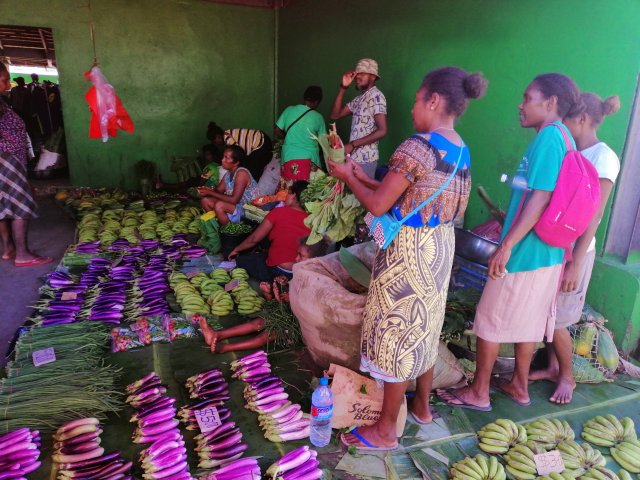
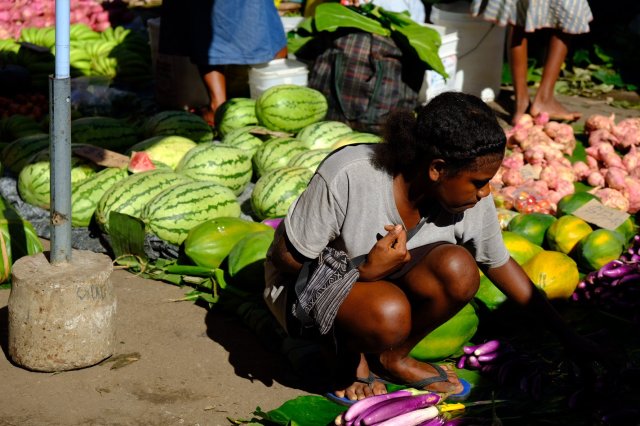
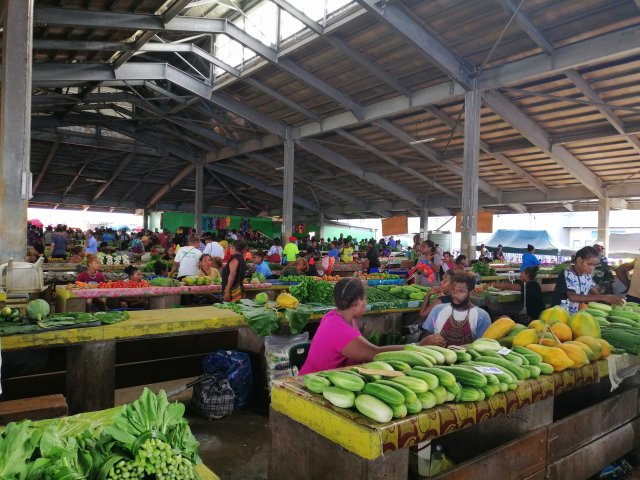
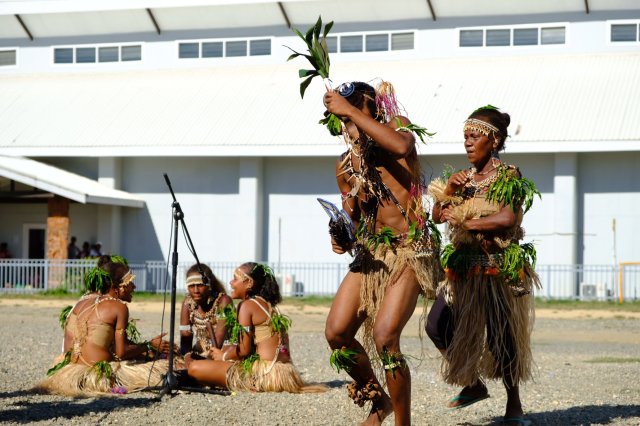
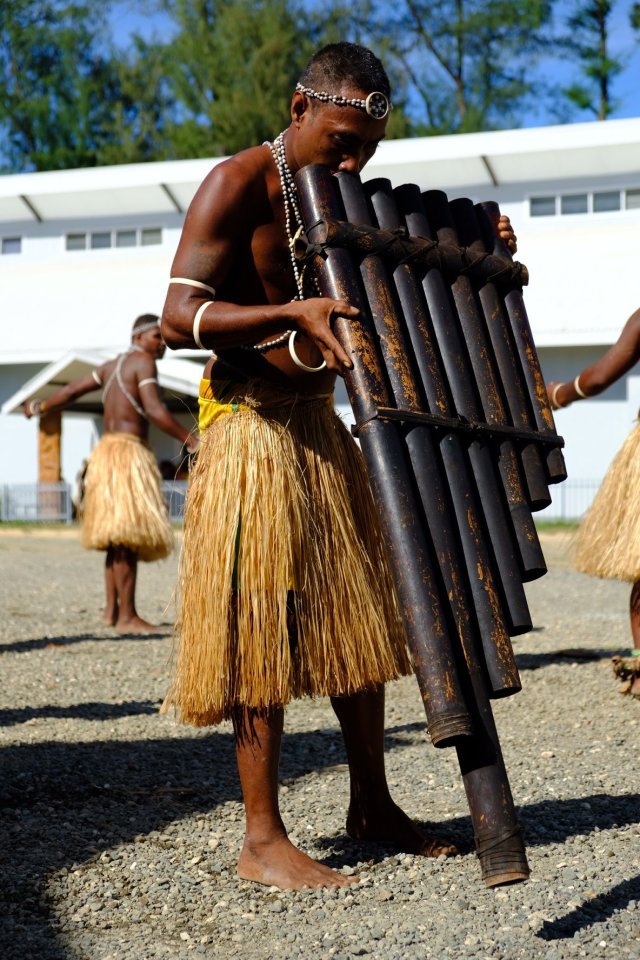
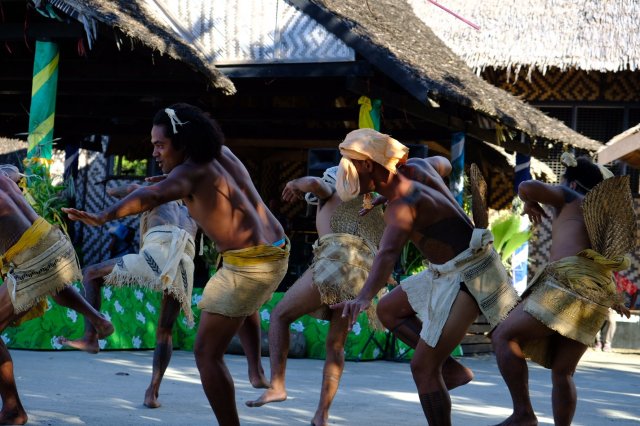
I kicked off my trip by jumping on the local mini vans to the National Museum and the notorious Central Market in Honiara. As soon as I stepped in the market, I was met with an explosion of colours: fruits, vegetables of all kinds (known and unknown), tuna and jewellery. Had it not been for my full stomach, I promise you I would have bought the whole market (those who know me well will tell you that my eyes are often bigger than my stomach). And I almost did it on my last day in Honiara, when I returned to the market to buy… just one pineapple. The trip to the Museum was no less exciting, with the second national mini pan pipe festival taking place exactly on the days of my stay in Honiara. A little glimpse into the Solomons’ true soul and an unforgettable encounter with the are’ are talents. And how safe everything felt, how friendly people seemed and how easy to go around (despite a first impression that might lead people to think otherwise).
Easy to go around, but definitely not that cheap if you want to explore some of the country’s islands (and you should definitely do it, it’s money well spent). I knew the Solomons would be expensive, but when you actually get to experience it, it naturally feels more… “acute”. You feel it even more when you try to book your domestic flights online and realise how ridiculously expensive the prices are. It might not be until your last days in the Solomon Islands that you’ll come to discover a sad fact: booking your flights at a physical office is much much cheaper than buying them online (even if the ticket is bought a day before the flight). But maybe you’re luckier or better informed, but I learned it the hard way. I could think of several reasons for this rather frustrating – let’s call it – practice, but I prefer to divert my attention to the other 90% memorable adventures that the islands will grant their visitors, especially to those that are brave enough to venture in the outer parts. Of all my experiences in the Solomons, this practice coupled with the wish for more money displayed by a few people was the only negative. But with so many other wonderful people, beautiful children, incredible nature and culture, you might even forget about this one experience.
The Solomons have so much to offer and you’ll come to realise that there will never be enough time to explore their unique, off the beaten treasures (by the way, the Solomons are among the 10 least visited countries in the world). With hindsight, I wish I had spent more time in the country, but hey, no second guessing travelling decisions, remember?!
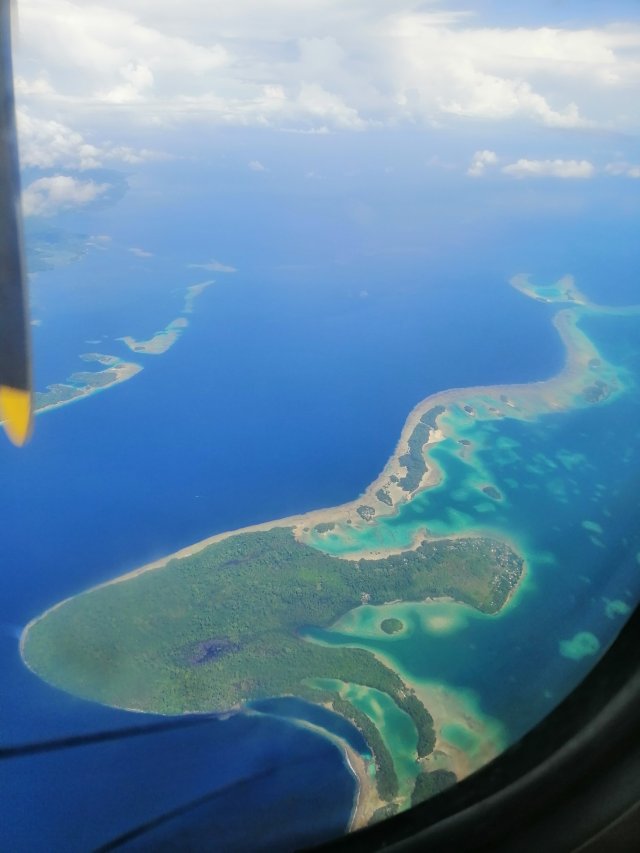
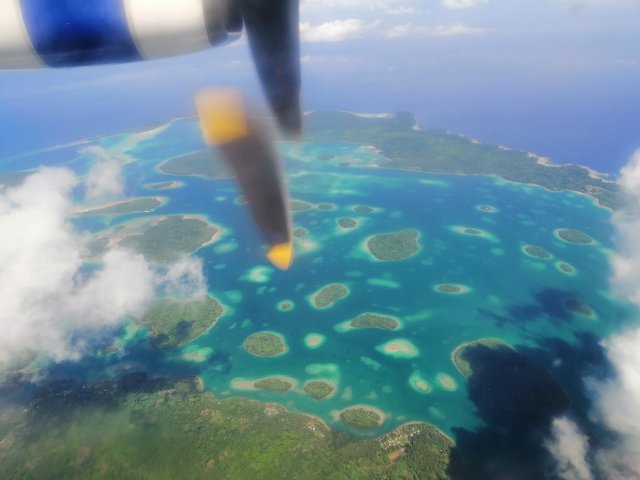
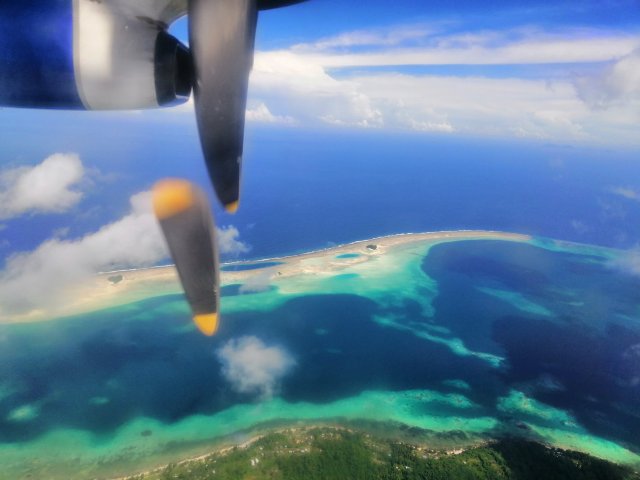
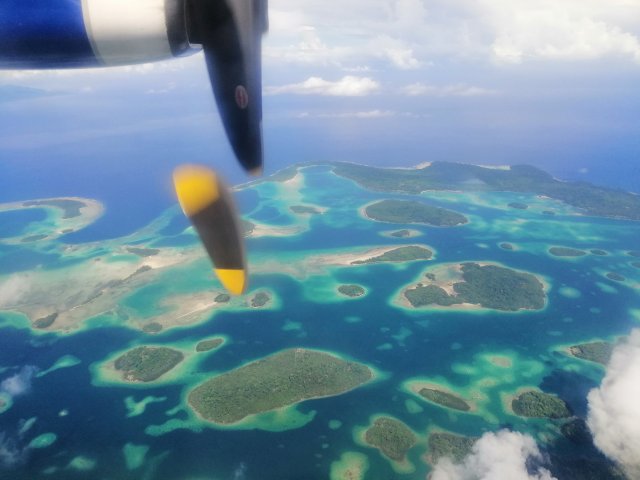
The Solomons have over 900 islands and you’d be surprised how diverse they all are. As you might imagine, a large proportion of these islands is uninhabited and the remaining ones are mostly rural, with villages scattered all across. I spent most of my time in the Western province, perhaps the most touristy and accessible part of the Solomons. My flight to Gizo, a gateway city in the West and a diving hub, would not come without a little hassle. Halfway through, exactly when I started to be excited about the scenery down there, with the lagoon islets slowly showing their glow, the plane had to take a turn and head back to Honiara. Our Dash 8 had some technical issues (I reckon it was the landing gear), so we had no choice but to return. Luckily, the engineers moved relatively fast so we could jump on the plane again after less than 2 hours. Excited about the view that I knew I would get in no time, I waited patiently. And how rewarded I was for my patience. It was perhaps the most scenic flight I have ever had on a commercial route.
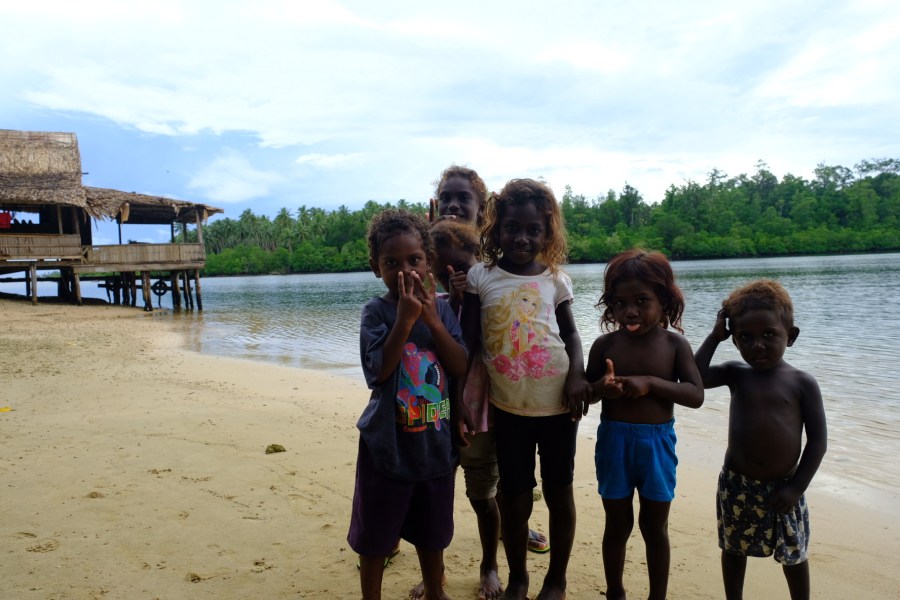
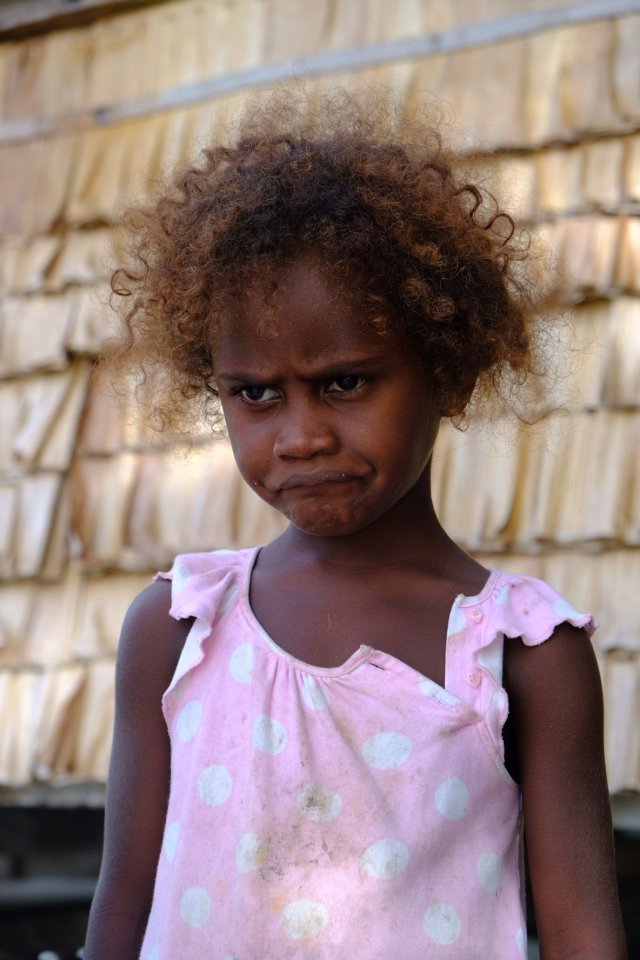
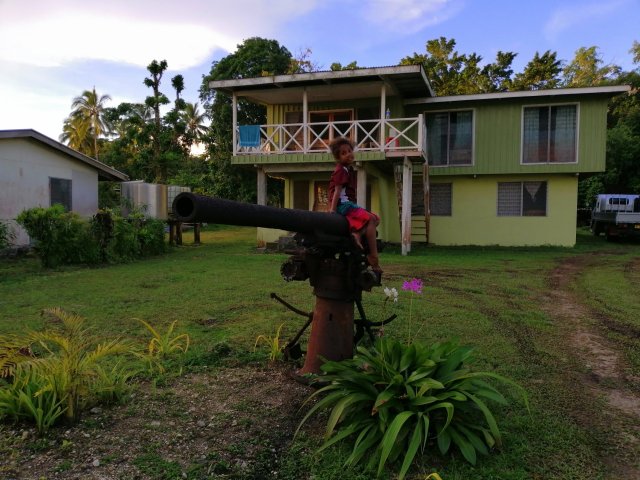
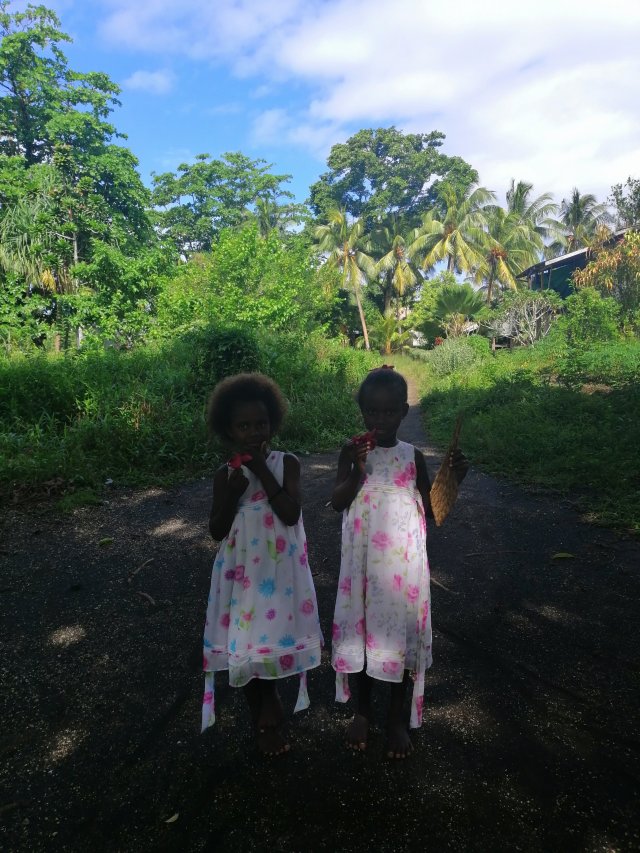
Arriving in Gizo, you’ll discover that even though it is a small island, it is full of surprises. As soon as you get out of “town” you’ll be met with peacefulness, friendly and curious villagers, shy kids and the relaxing sound of waves breaking close to the shore. You’ll also escape the mosquitoes’ cruel attack, thus getting less worried about the possibility of getting malaria and more relieved for not having to put on repellent the entire time. You might get some rain, wind and rough seas if you decide to do some hopping around. Rough seas…not fun when you’re on a small boat, rolling and getting splashed until you’re completely soaked. Not to mention your adrenaline levels which will go up really quickly. You know that the boat driver is professional, but you won’t help thinking about that one possibility… what if the boat capsizes? Trust me, it won’t capsize. In no time will you get familiar and relatively comfortable with the choppy waters, as the travel by boat becomes your regular means of transportation. Especially if you’re a diver or a snorkeling enthusiast or just a curious human wanting to explore the nearby islands, as well as the further away ones. The Pacific waters and, in particular, the Solomons’ host amazing marine wildlife and shipwrecks. Diving or snorkeling, you’re almost guaranteed to see sharks, WWII shipwrecks or other relics or schools of fish, each more colourful than the other. It would be my 3rd discover scuba dive experience, but it would also be the longest, the deepest and absolutely the best (shhht, don’t tell anyone, but we exceeded the allowed depth by a few meters). In all honesty, I regretted a little bit not completing my open water certification here, but I got to experience other parts of the country that I wouldn’t have been able to explore otherwise. And I got to like the peanut butter which would soon become my new favourite (or my new obsession?! 🤔).
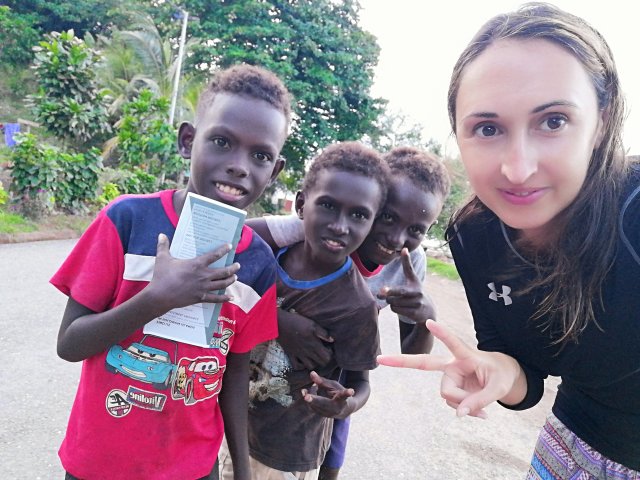
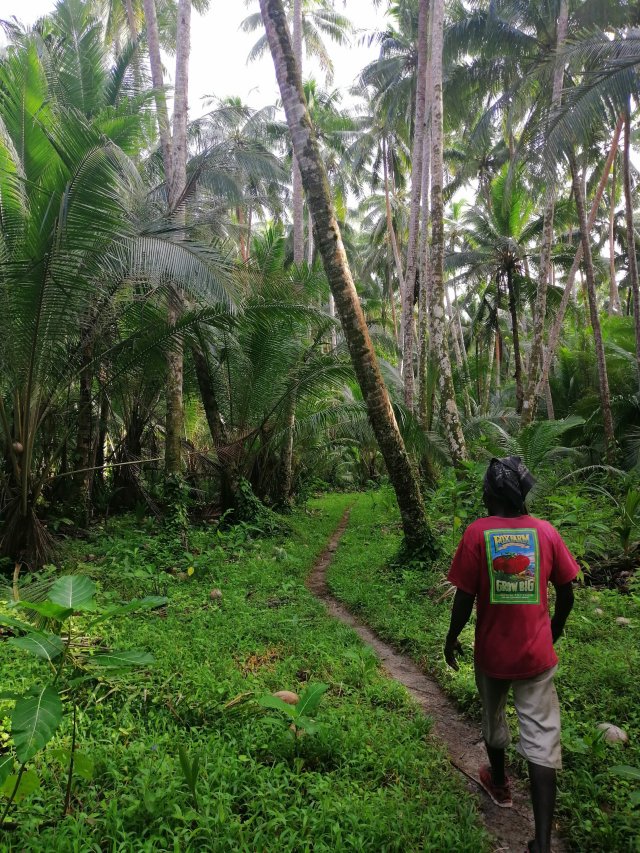
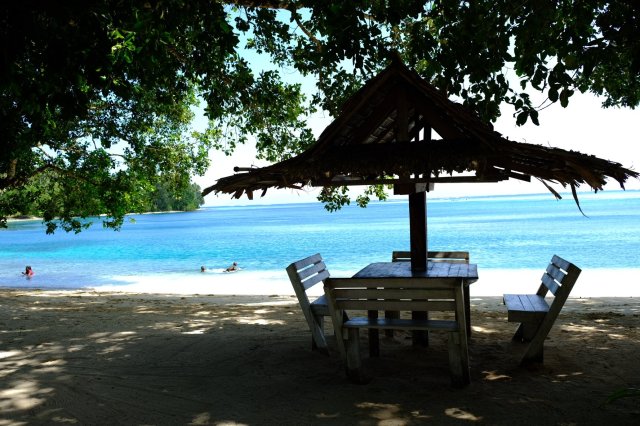
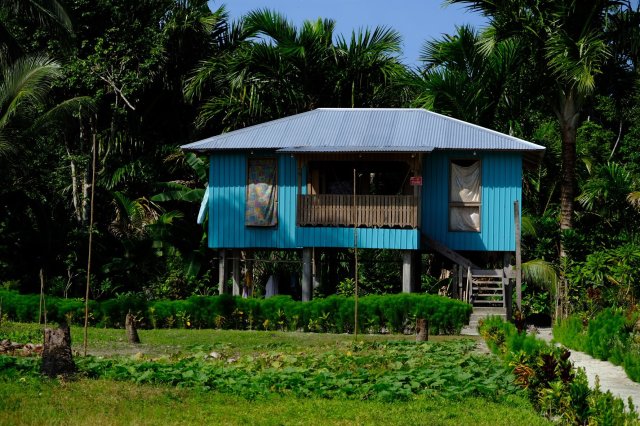
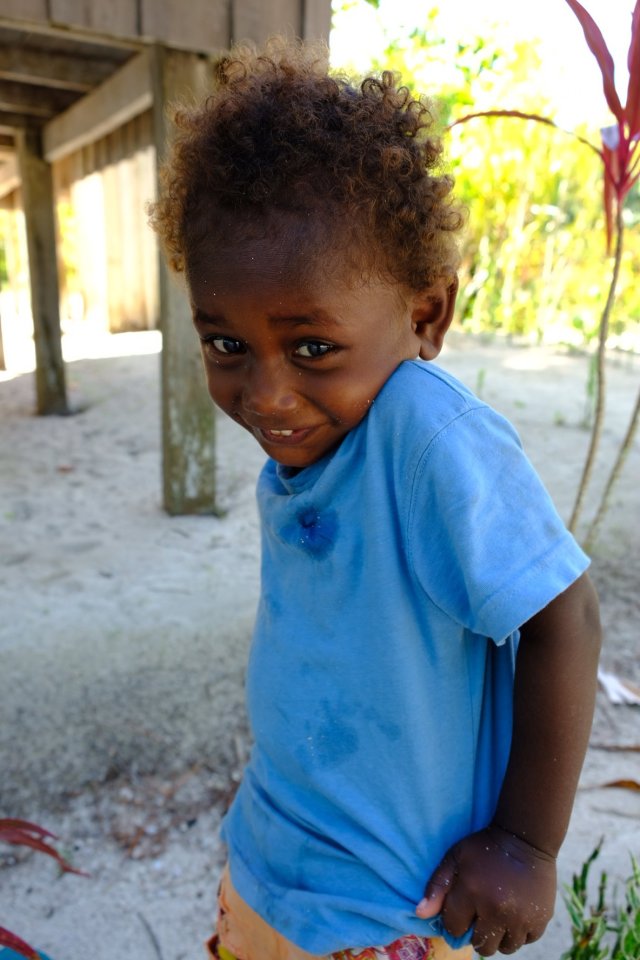
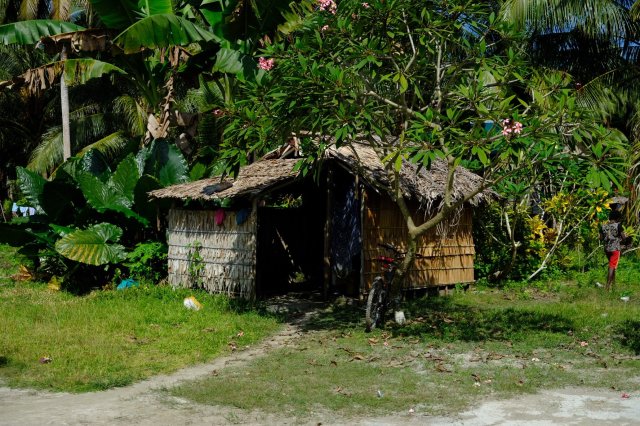
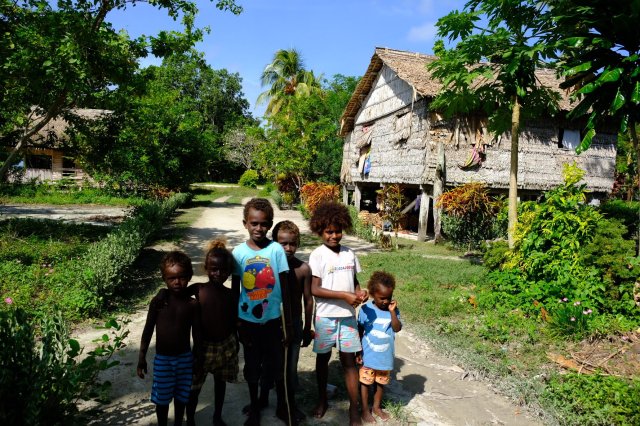
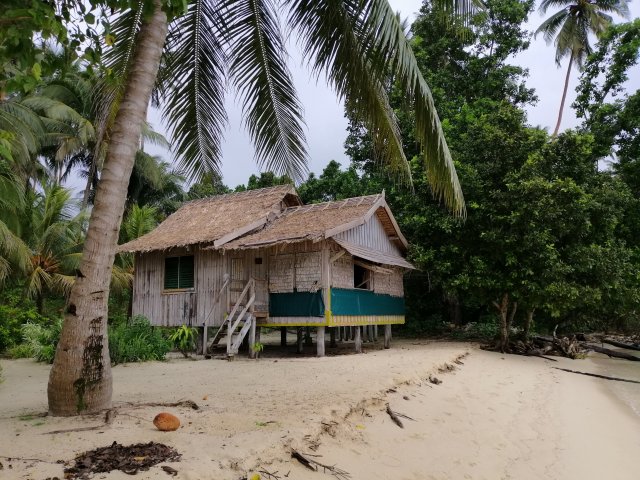
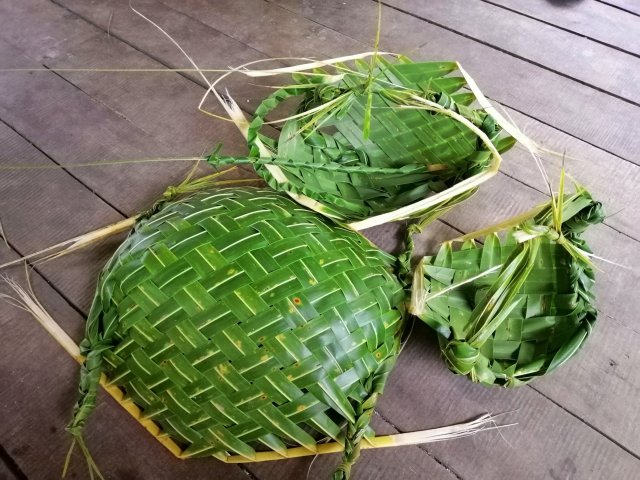
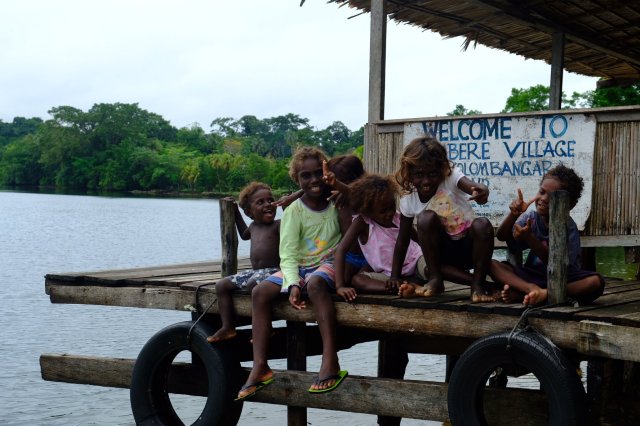
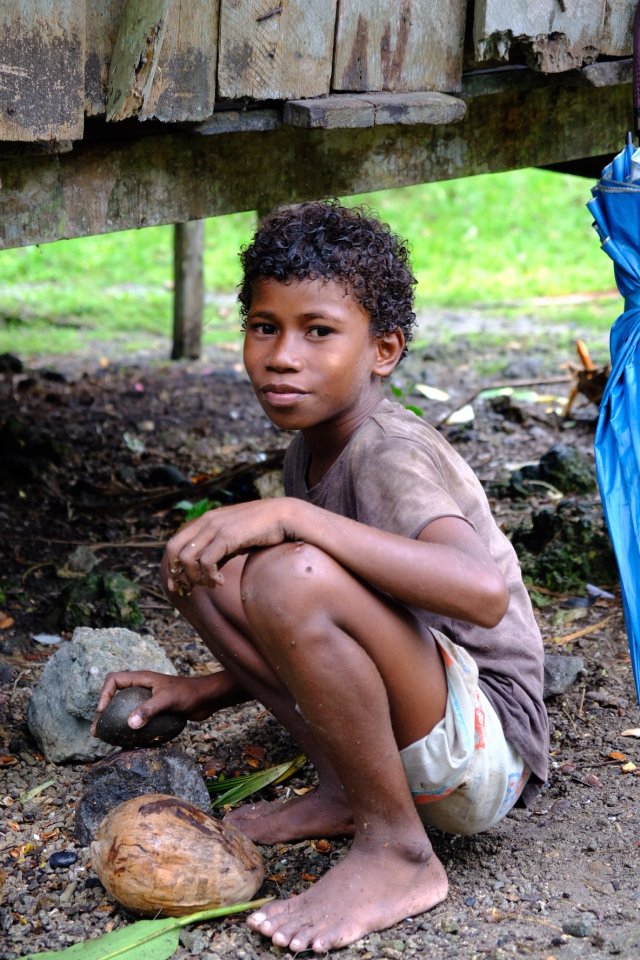
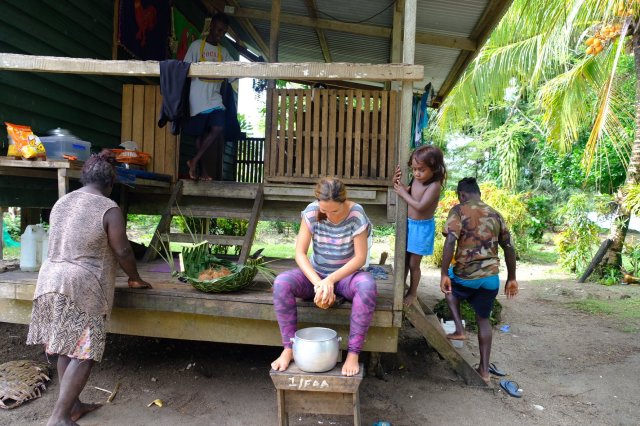
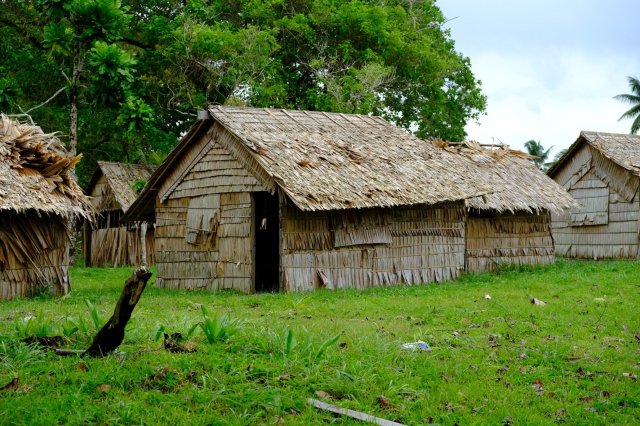
So much so that I carried my little peanut butter jar all the way to Hambere village, on Kolombangara island, where it would nicely complement my pancake breakfast. What else can you do when your moody friend returns with more and more rain, making it hard to explore the island and almost impossible to transfer for your flight the next day?! The obvious consequence? Eating more (peanut butter), reading more and changing your plans. Luckily, a few calls to the airline (which ate up all my credit and battery) and I managed to change the date of my flight, thus becoming more relaxed and voluntarily “stranded” in the village. Being “stranded” turned out to be very enjoyable, with the good weather returning and allowing me to discover the island a bit better. The bonus? Living with the villagers, entertaining a bunch of kids, learning how to weave (finally) and helping with the coconut scrapping, in preparation for a motu meal (motu is a traditional way of cooking which is done outside, on stones). And what laughters my coconut scrapping skills produced among some villagers. Had I stayed longer on the island, the laughters would have surely continued as my other skills were slowly revealed.
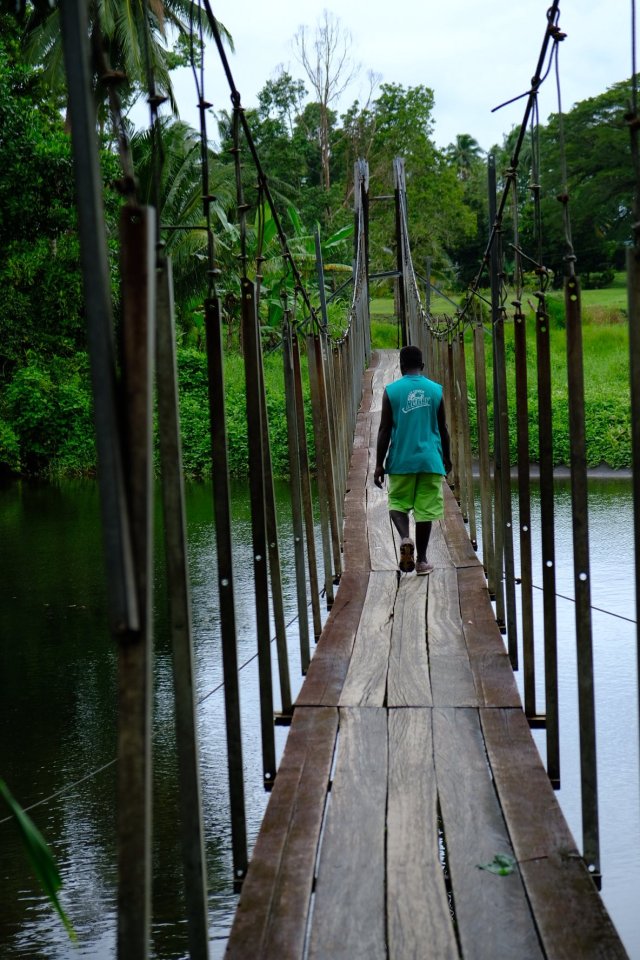
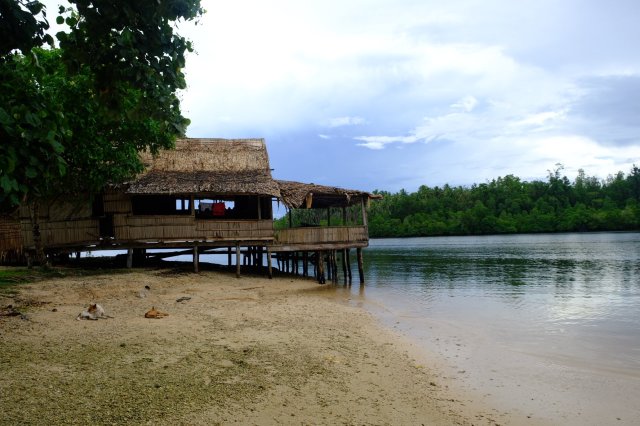
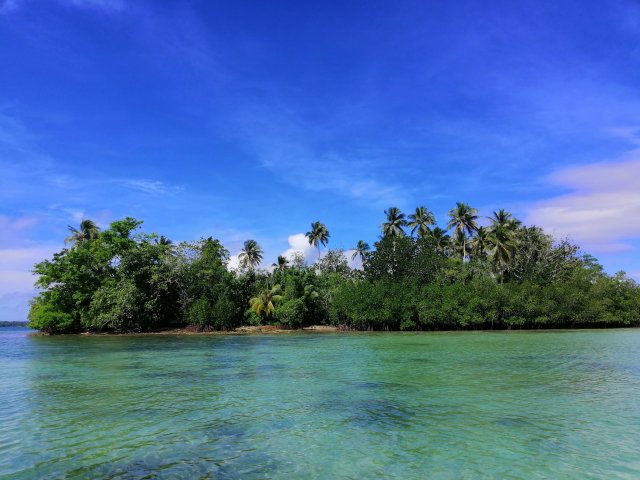
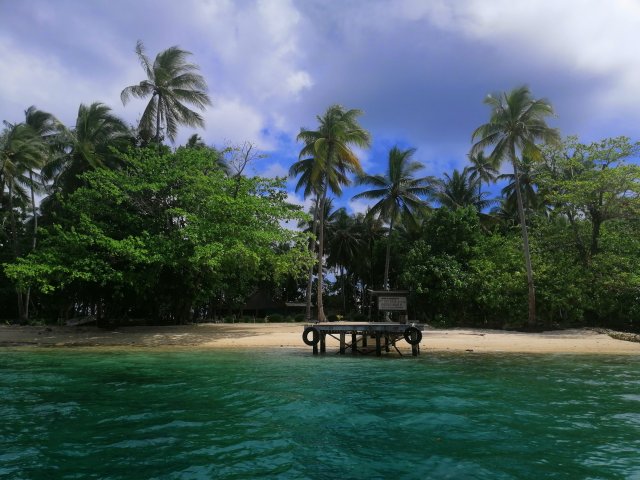
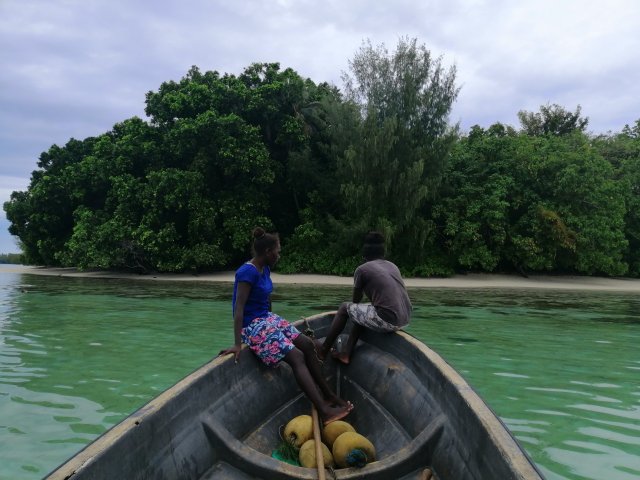
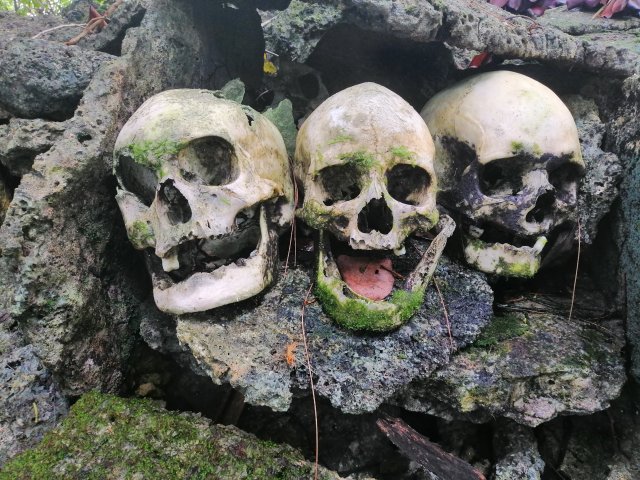
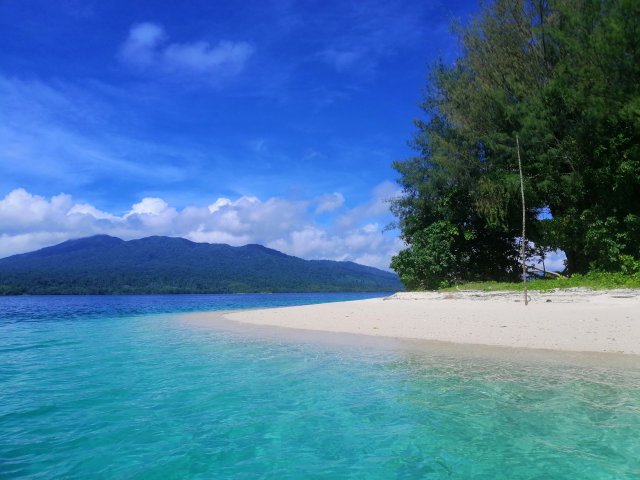
But it was time to move on to Munda, a little town in New Georgia famous for diving and the base for my returning flight to Honiara. The 1,5 hours boat ride from Kolombangara to Munda would be smooth and rewarding, especially at the sight of sharks and dolphins. I would spend the rest of the day with the boat “crew” – my host in Hambere, his brother and two uncles -, picnicking on a tiny island, beautifully painted with turquoise-blue waters, walking in the uncles’ village on Rendova Island and getting sunburnt. I would continue by chatting with my new hosts in Munda about endless topics (including about how things “work” in the Solomon Islands, namely the occasional tourist rip offs) which would be pleasant, enriching and eye-opening. Less pleasant would be the start of my last day in Munda when I had to wait for more than two hours for the boat driver taking me on a trip to the sacred Skull Island. Solomon time! Not to mention that he wasn’t exactly sure where the island was and, guess what, got lost! After a few trials, we managed to find it, got in, took a few photos of the warriors’ skulls and departed. Little did I know that the visit to the Skull Island needed to be properly organised and, most importantly, announced to the spirits on the island, asking for their permission. Have I disturbed the spirits, was the encounter with the many dolphins on our way back a message? I am sure the warriors will not hold a grudge against me, will they?! Dear spirits, I promise I will pay my respects the next time I’ll come to visit you.
And I really hope I will have the chance to return one day, both because the Solomon Islands are among the most fascinating places I have ever visited and because I would like a complete experience, further exploring the Solomons’ uncharted territories, cultures and people. Until then, I remain with the experiences of these two weeks which have been so diverse, yet so personal.
 goingsolo